

Last updated: November 9, 2026
Short answer: 1/2×28 and 5/8×24 describe the barrel’s thread diameter and spacing, and the mount on the can has to match. You will see 1/2×28 on many 5.56, 9mm and .22 hosts. Many .308 and 6.5 barrels use 5/8×24, but caliber alone never settles it. Check the exact model specification or measure it, then confirm bore alignment.
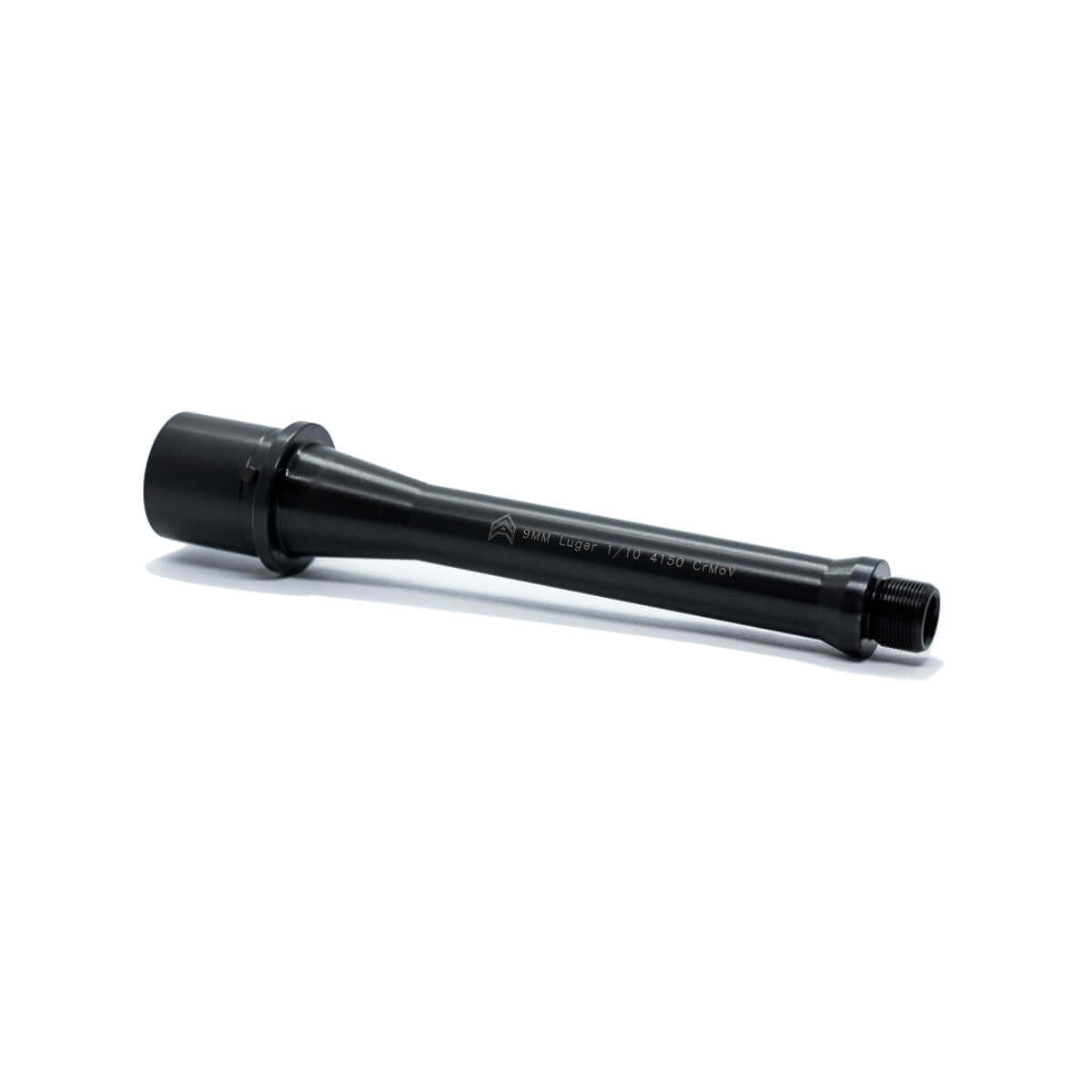
Thread pitch is two measurements, not one
In a U.S. muzzle-thread callout such as 1/2×28, the first number is the nominal major thread diameter in inches and the second is threads per inch. A 5/8×24 thread has a nominal 5/8-inch diameter and 24 threads per inch. The two do not interchange.
Metric callouts work differently. M13.5×1 names a nominal 13.5-millimeter diameter and a 1-millimeter distance from one thread crest to the next. It does not mean one thread per inch. LH means left-hand thread and RH means right-hand. That direction matters too. Never force a mount that starts crooked or tightens the wrong way.
A caliber stamp tells you the cartridge. It does not establish a muzzle thread. Even the exact firearm family is not enough when a company has used different barrels across generations or markets.
Find the pitch on your gun before you order a mount
Look up the model or SKU first. The controlling document is the manufacturer’s page or manual for the barrel or complete firearm, not a general chart with a logo at the top. Ruger, for example, prints a Thread Pattern field on its individual model pages. 10/22 model 32004 is specifically listed as 1/2×28. That does not turn every 10/22 ever made into a threaded rifle, and an aftermarket barrel gets its own specification.
Read the barrel and any muzzle-device documentation. A barrel may show the chamber caliber, maker, part number or thread information. If it gives only caliber, keep looking. An installed brake or flash hider can hide the muzzle threads. Its packaging or manual may identify them, but that still does not prove a previous owner did not change the part.
Measure an unknown thread with the right tools. Unload the firearm, open the action, remove the magazine and check the chamber before doing any work around the muzzle. Clean the exposed threads. Measure the major diameter with a caliper, then use an imperial or metric pitch gauge leaf that fits the thread profile. A proper leaf seats across consecutive threads without rocking or drifting out of register. Do not force it. Tameson’s measurement guide explains diameter, TPI and metric pitch. If you are not certain of the match, stop and let a competent gunsmith check it.
Measuring tells you the thread. It does not establish that the barrel, shoulder and suppressor are concentric. Alignment is a separate check covered below.
Common muzzle threads, with actual maker examples
These are documented examples, not substitution rules. Some are factory complete-firearm specifications; others are the manufacturer’s own barrel or mount specifications. Match the exact model and SKU before buying.
| Thread | Caliber or platform example | Manufacturer source checked Nov. 6, 2026 |
|---|---|---|
| 1/2×28 | Rainier’s 16-inch 5.56 NATO AR-15 barrel; Glock’s G19 Gen3/Gen4 9mm threaded barrel; Ruger’s 10/22 model 32004 in .22 LR | Rainier barrel spec; Glock SKU 47739; Ruger model 32004 |
| 5/8×24 | Ruger Precision Rifle model 18103 in 6.5 Creedmoor and model 18104 in .308 Winchester | Ruger model 18103; Ruger model 18104 |
| 1/2×36 | Angstadt’s 6-inch 9mm AR-15 barrel | Angstadt barrel spec |
| M14x1 LH | Original AK and AKM-pattern muzzle threads. Later AK variants can differ, so inspect the rifle instead of assuming all 7.62×39 guns share it. | Kalashnikov’s AK muzzle-device history |
| M24x1.5 RH | The pattern introduced with the AK-74 brake, and some other AK variants. It is not M14x1 LH. | Kalashnikov on the AK-74 change; Arsenal’s 24×1.5 RH device |
| M13.5×1 LH | Glock’s G17 Gen3/Gen4 9mm threaded barrel and SIG’s P320/P250 Compact 9mm threaded barrel | Glock SKU 39893; SIG SKU BBL-MOD-C-9-TB |
| 3/8×24 | The native thread on Smith & Wesson’s M&P22 Compact, which its factory adapter converts to 1/2×28 | Smith & Wesson adapter specification |
| 9/16×24 RH | One of the available thread-and-caliber combinations on SilencerCo’s ASR muzzle brake, including a .30-caliber option | SilencerCo ASR variation chart |
AKs need a correction you will not find in some web charts: original AK/AKM muzzle threads are M14x1 left-hand, while the AK-74 pattern moved to M24x1.5 right-hand with its brake. You cannot identify either by a loose name such as “AK pistol.” The maker’s AK history lays out the change in 1974.
The common hosts people ask us about
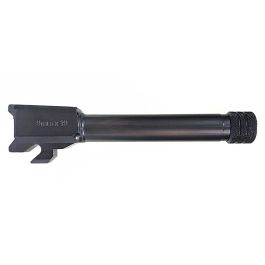
Glock: Glock’s own catalog proves why “Glock threads” is not a complete answer. Its G19 Gen3/Gen4 barrel 47739 is 1/2×28 RH. Its G17 Gen3/Gen4 barrel 39893 is M13.5×1 LH. Standard, unthreaded pistols need an appropriate threaded barrel or professionally evaluated work before you attach a muzzle device. Most centerfire Glocks also use a tilting-barrel action, so suppressor mounting involves the right piston where the can requires one, not just a thread match.
Ruger 10/22: the threaded Ruger 10/22 Standard model 32004 uses 1/2×28 and ships with a thread protector. Other 10/22 variants exist, including unthreaded barrels. Read the model number on your rifle and then check the corresponding spec page. Our .22 suppressor guide covers rimfire-specific barrel and cleaning considerations.
AR-15: many 5.56 AR barrels use 1/2×28, like the Rainier Select barrel above, but AR pattern describes the rifle family, not a universal muzzle. One Angstadt 9mm AR barrel is 1/2×36, while other 9mm hosts use other pitches. An AR in another cartridge may not use the common 5.56 pattern and needs its own caliber-rated setup. Start at the barrel’s own markings or parts listing.
.308 bolt rifle: Ruger’s Precision Rifle 18104 gives us a clear factory 5/8×24 example, and model 18103 shows the same thread on a 6.5 Creedmoor. Do not turn that into “all 6.5 barrels are 5/8×24.” Manufacturer catalogs include other metric and inch specifications. Our .30-caliber suppressor comparison is the next read once the host and mount are sorted out.
Bore size and alignment matter more than matching threads
A thread that screws on does not make the setup safe to fire. The host cartridge must be within the rating of the suppressor and of its front cap or brake. Precision Armament’s TiTrex manual checked November 6 says to verify that the firearm caliber is equal to or less than the maximum caliber rating of both. Never put a smaller-bore suppressor on a larger caliber just because an adapter made the threads match.
The can also has to sit against the barrel’s shoulder, with the threads and bore concentric. A poor shoulder, an unsuitable adapter or crooked threads can allow the bullet to hit the suppressor. Precision Armament calls for an alignment rod specific to the firearm caliber after mounting, and says to stop and consult a qualified gunsmith if the can is not concentric with the bore. Read the manufacturer safety instructions, keep the firearm unloaded during checks, and follow the instructions for your particular can.
A piston on a tilting-barrel pistol, a direct-thread mount on a bolt rifle and a fixed-barrel spacer on some fixed hosts do different mechanical jobs. Our direct-thread, QD and HUB guide sorts out those differences before you spend money.
Thread protectors, adapters and HUB
A thread protector keeps exposed barrel threads from getting banged up when no device is attached. It is not a suppressor mount. Keep it serviced and reinstall it as directed when the brake or can comes off.
A thread adapter can move from one barrel thread to another, such as Smith & Wesson’s documented 3/8×24 to 1/2×28 rimfire adapter. It is not permission to cross caliber limits or ignore concentricity. Buy one identified for the exact firearm and application, and check the resulting alignment.
HUB is the rear interface on the suppressor, not your barrel’s pitch. The common HUB specification is 1.375×24. A Griffin direct-thread HUB adapter, for example, attaches to a 1.375×24 suppressor and offers a separate 1/2×28 or 5/8×24 thread for the barrel. Those two ends answer different questions. Griffin’s adapter page also calls for baffle-alignment inspection on each host before firing.
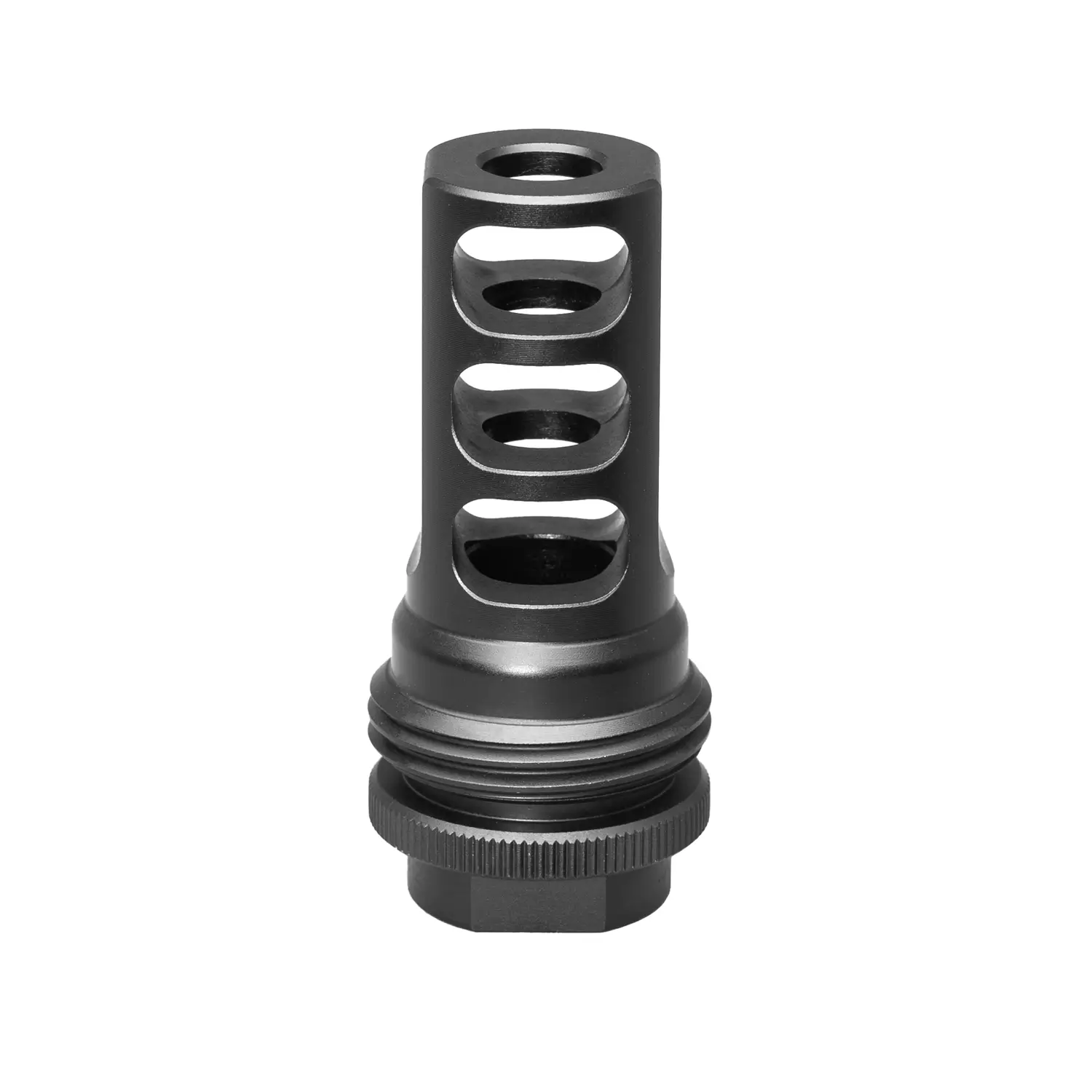
CCA can thread your rifle barrel to your specs
As of November 6, 2026, our gunsmithing page lists Standard Rifle Barrel Threading at $200. Its complete description of that line is “Barrel threaded to your specs.” It lists Extensive Barrel Threading from $225 for models such as Browning BARs, so a shop assessment comes before assuming the standard price covers your rifle.
Call the shop at 251-368-4447 with questions about turnaround, what the $200 job includes, or whether your rifle needs extensive threading.
This is an in-store gunsmith-service guide, not a mail-in threading offer. Bring the rifle and the suppressor or mount information when requested so the shop can establish the intended thread and shoulder before cutting. Do not order a mount just because a chart says your cartridge usually gets a certain thread.
FAQ
What thread pitch do most 5.56 AR-15 barrels use?
Many use 1/2×28, and Rainier lists that exact thread on its 16-inch 5.56 NATO barrel. “Many” is not “all.” Your AR can be chambered in another cartridge or carry an aftermarket barrel with a different pitch. Find the barrel specification or measure its diameter and pitch before buying the matching muzzle device or suppressor mount.
Is 5/8×24 only for .308 rifles?
No. Ruger lists 5/8×24 on Precision Rifle models in both .308 Winchester and 6.5 Creedmoor. Thread pitch tells you the mechanical mount pattern, not which cartridges a suppressor can safely handle. Check the suppressor’s caliber rating, front cap and barrel requirements separately, then check alignment on the exact host firearm before firing.
What thread pitch does a Ruger 10/22 use?
Ruger’s 10/22 Standard model 32004 uses 1/2×28 and includes a thread protector. Not every 10/22 is that model or has factory threading, and replacement barrels follow their own specifications. Use the rifle’s model number and current manufacturer page to confirm yours. See our .22 suppressor guide for can considerations after that.
Are Glock threaded barrels 1/2×28 or M13.5×1 LH?
Glock’s own catalog lists both, depending on the barrel. Its G19 Gen3/Gen4 barrel 47739 is listed as 1/2×28 RH, while its G17 Gen3/Gen4 barrel 39893 is M13.5×1 LH. Do not guess from the pistol name alone. Confirm the installed barrel’s part number or specification, and make sure the suppressor’s piston matches that exact thread.
Can a thread adapter let me use a smaller suppressor on a bigger caliber?
No. An adapter answers a mechanical thread mismatch, not a bore-size mismatch. Precision Armament says the firearm caliber must be equal to or less than the maximum rating of the suppressor and front attachment. A correct adapter still needs suitable shoulders and verified bore alignment. If the cartridge exceeds any part’s rating, do not mount or fire that combination.
What is the difference between 5/8×24 and HUB 1.375×24?
A 5/8×24 callout commonly describes the muzzle thread on the barrel. HUB 1.375×24 is a larger interface on the rear of many suppressors that accepts a mount. A HUB direct-thread adapter joins those separate systems. Match the barrel end of the adapter to your barrel, the other end to the can, and then verify the caliber rating and alignment.
How much does CCA charge for standard rifle barrel threading?
Our live gunsmithing page lists standard rifle barrel threading at $200, described as “Barrel threaded to your specs.” Extensive barrel threading starts at $225. Let the shop assess your exact rifle and mount before you assume the standard classification or order parts. Call the shop at 251-368-4447 with questions.
Are AK-47 and AK-74 muzzle threads the same?
No. Kalashnikov documents M14x1 left-hand threads on the original AK pattern and a change to M24x1.5 right-hand threads with the AK-74 brake in 1974. Many variants and modifications exist, so inspect the actual rifle and manufacturer documentation. Never force a device onto the wrong-hand thread, and don’t treat any 7.62×39 AK as automatically M14x1.
Once the barrel and mount are settled, compare suppressors available to order, read our 9mm guide, or use the mount guide to choose the right setup.
Sources
- Glock: G19 Gen3/Gen4 threaded barrel 47739
- Glock: G17 Gen3/Gen4 threaded barrel 39893
- Ruger: 10/22 Standard model 32004
- Ruger: Precision Rifle model 18103
- Ruger: Precision Rifle model 18104
- Rainier Arms: Select 5.56 NATO AR-15 barrel
- Angstadt Arms: 6-inch 9mm AR-15 barrel
- SIG Sauer: P320/P250 Compact threaded barrel
- Kalashnikov: AK muzzle devices, including AK/AKM and AK-74 thread history
- Arsenal: 24×1.5mm RH AK flash hider
- Smith & Wesson: M&P22 Compact suppressor adapter
- SilencerCo: ASR muzzle brake variations
- Griffin Armament: Direct Thread HUB adapters
- Precision Armament: TiTrex installation and safety manual
- Tameson: measuring thread diameter and pitch, industry measurement reference
- CCA: Gunsmithing Services, live prices checked November 6, 2026
- CCA: suppressor-buying guide for the October 9 policy
- CCA: Direct Thread vs. QD vs. HUB
- CCA: .22 suppressor guide
- CCA: 9mm suppressor guide
- CCA: .30-caliber suppressor guide