

Last updated: October 30, 2026
Short answer: For most hog and predator hunters, no. The DNT Hydra HS650R gives you a 640 sensor, a 50mm lens, a laser rangefinder and clip-on use for a little under half what the AGM Rattler V3 50-640 runs. The AGM earns its price with a more sensitive sensor, a much sharper display, longer battery life and a better-liked app. You’re paying double for the last stretch of image quality.
“DNT or AGM?” is all over the thermal forums right now, and it’s a fair question. Both brands sell 640 scopes with 50mm glass and a built-in rangefinder, and the AGM costs a little more than twice as much. As of October 30, 2026, that’s about how the two sit on our product pages, and prices move, so check the listings before you lean on that math. Below we go spec by spec from DNT’s and AGM’s own pages, then get into the stuff the spec sheet won’t tell you, like clip-on use and the phone apps. We’ll also cover the budget 384 pair, where the argument comes out different.
Why this matchup comes up so much
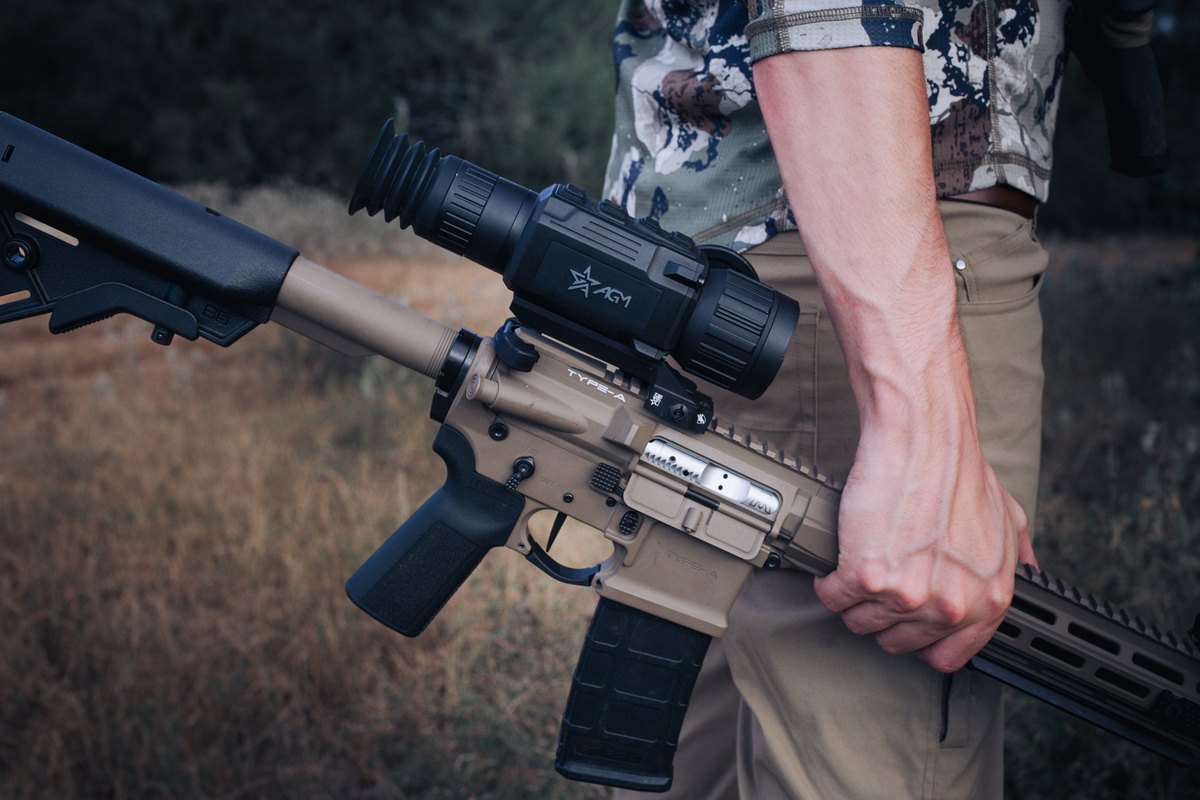
Because the two scopes look so alike on paper. The HS650R and the Rattler V3 50-640 both put a 640×512, 12-micron sensor behind a 50mm lens, both refresh at 50 frames a second, both range and both carry a ballistic calculator (DNT, AGM). When two optics match that close and one costs twice as much, folks want to know where the money went.
4MR Ranch asked the same thing in a video called “The Diminishing Returns of Thermal”, which runs these exact two scopes against each other. It’s worth a watch before you read our take, because seeing the picture for yourself tells you more than any spec sheet will.
HS650R vs Rattler V3 50-640, spec for spec
Here’s how the two makers list them. Every line comes from DNT’s and AGM’s own product pages, and NETD is each maker’s own rating, not a lab number.
| DNT Hydra HS650R | AGM Rattler V3 LRF 50-640 | |
|---|---|---|
| Sensor | 640×512, 12 µm, 50 fps | 640×512, 12 µm VOx, 50 Hz |
| NETD (maker’s rating) | 18 mK or less at 25°C | Under 15 mK at 25°C, F/1.0 |
| Lens | 50mm | 50mm, F/1.0 |
| Magnification | 2.5x base, 2.5x to 10x digital | 3.5x base, 3.5x to 28x digital |
| Field of view at 100 yd | 15.4 x 11.5 yd (about 46 x 35 ft) | 46 x 37 ft |
| Display | 1024×768 micro-OLED | 2560×2560, 1.03 in. OLED |
| Laser rangefinder | Built in, 5 to 1,300 yd, with ballistic calculator | Built into the lens, 10 to 1,000 m, ±1 m, with ballistic calculator |
| Recording and storage | 32GB built-in memory; share video through the DNT app | 64GB built-in; 1280×1280 video with audio, shot-activated recording |
| Battery | 18650 flat-top (two included); 4 hr rated | NE-4400 removable pack (two included); up to 5.5 hr rated |
| Weight | 18.2 oz (net weight as listed) | 1.70 lb without battery and mount |
| Warranty | 5 years with product registration | 5 years (U.S. purchases) |
| Use as | Scope, clip-on or handheld | Riflescope |
| Mount in the box | DNT QDM150 quick-detach | ADM quick-detach |
| Maker’s page | DNT Optics | AGM Global Vision |
| Our listing | DNT Hydra HS650R | AGM Rattler V3 50-640 |
Read that grid and you’ll see the AGM’s edge sits in a few spots. Its sensor is rated more sensitive, under 15 mK against DNT’s 18 mK or less. Lower NETD means the scope can show smaller temperature differences, which tends to matter most on muggy nights and in fog, when everything starts to look the same temperature. The bigger jump is the display. AGM put a 2560×2560 OLED in the V3, and DNT uses a 1024×768 micro-OLED. Both are still showing a 640×512 sensor, so the screen won’t add detail the sensor didn’t catch, but it will change how clean the picture looks to your eye.
The DNT wins its own share of lines. It’s lighter by a good margin, 18.2 ounces against AGM’s 1.70 pounds before you add the battery and mount. DNT rates its rangefinder out to 1,300 yards, and AGM rates its to 1,000 meters. The field of view comes out nearly the same, about 46 feet wide at 100 yards on both, even though the AGM starts at 3.5x and the DNT at 2.5x. And the HS650R runs on 18650 flat-top batteries, which are easy to keep a pocketful of. AGM uses its own NE-4400 pack.
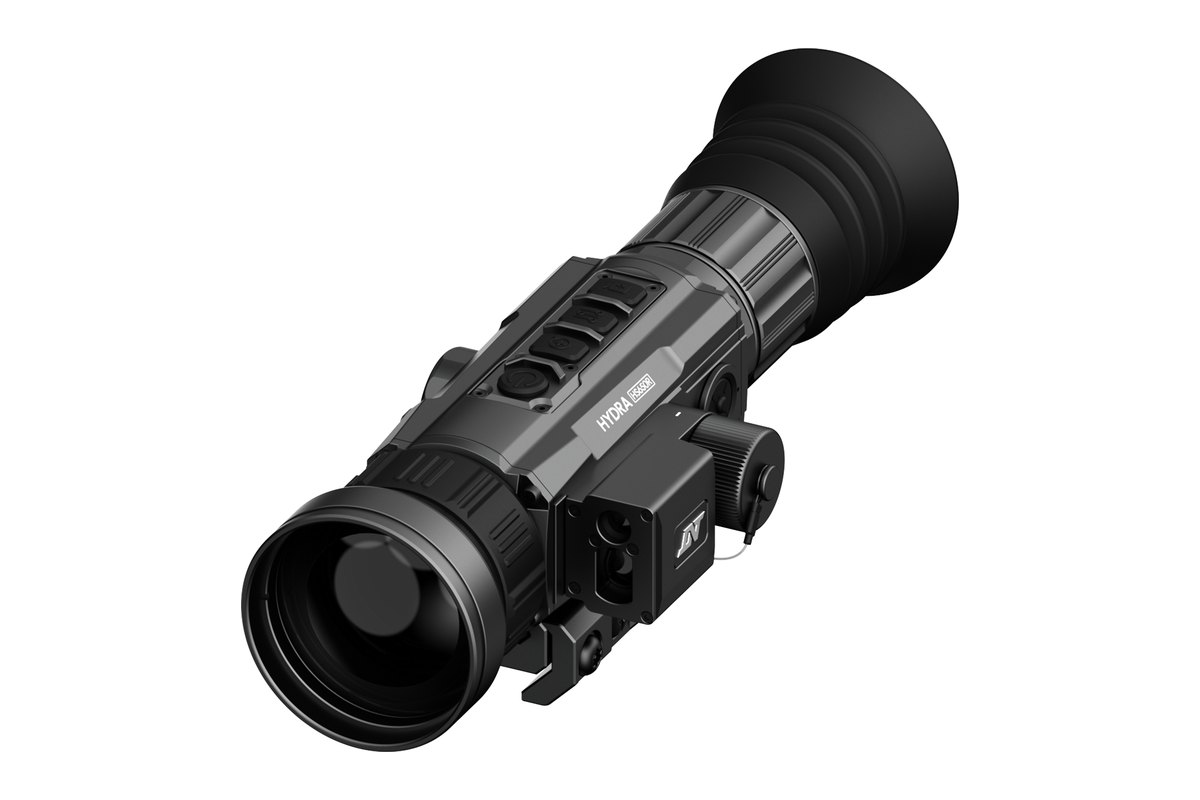
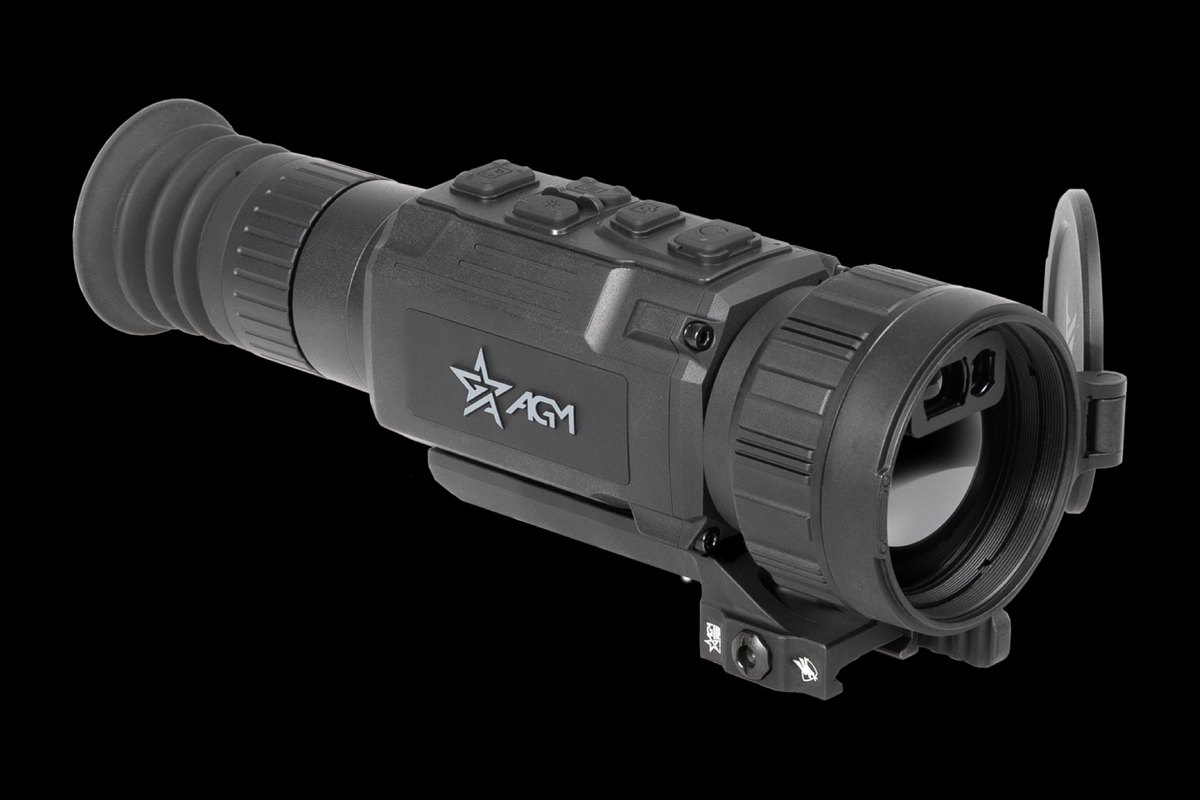
Battery life goes AGM’s way on paper, up to 5.5 hours against DNT’s 4, and AGM gives you 64GB of storage to DNT’s 32GB. Both makers put two batteries in the box and both back these 640s for five years, though DNT’s five years depends on registering the product (DNT, AGM warranty terms).
So is the AGM worth twice the money?
That depends on how often you’re squeezing the last bit of contrast out of a bad night. If you’re shooting hogs over a feeder at 150 yards, a 640 sensor behind 50mm glass is a lot of scope already, and the money you didn’t spend buys a lot of ammunition and a spare mount. If you hunt coyotes across big open ground in humid weather and want the cleanest picture at the far end of your range, the V3’s sensor rating and display are the parts of the price you can actually see.
What you don’t get for the extra money is more sensor. Both are 640s behind 50mm glass. That’s the idea behind 4MR’s title: past a certain point, each step up in price buys a smaller step up in what you see. We’d rather tell you that straight than sell you a scope you didn’t need.
If you like AGM but the 50mm price stings, the Rattler V3 LRF 35-640 uses a 35mm lens. On the DNT side, the HS635R does the same thing.
Clip-on or dedicated scope
This is where the two brands really split. DNT builds every Hydra as a 3-in-1: you can run it as your only optic, clip it in front of the day scope you already own, or pull it off and use it as a handheld scanner (DNT Optics). The Rattler is a dedicated thermal riflescope. AGM does make clip-ons, but they’re a separate line, like the Rattler-C V2 35-384 and Rattler-C V2 50-640.
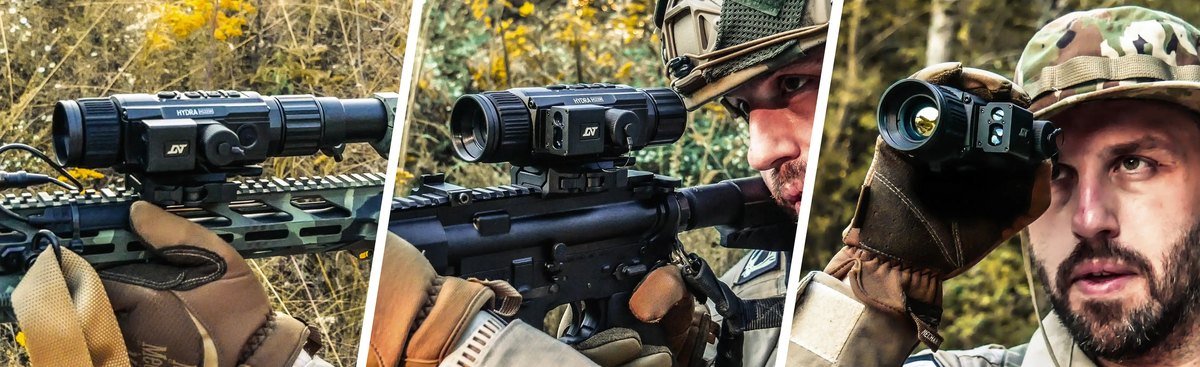
The clip-on route is handy if you’ve got a day scope you trust and don’t want to give up. One owner on r/ThermalHunting did warn that the Hydra’s picture goes soft as a clip-on once the day scope’s zoom goes past about 3x, and noted that was on the 384 model they tested (Reddit thread). Run as a standalone scope, they said you won’t notice it. We’d take that as one owner’s experience, not gospel, but it’s a fair thing to know before you plan on clipping a Hydra in front of a high-power scope.
If you want thermal and night vision in one box, DNT’s ThermNight TNC335R is a different animal. DNT calls it a multispectral scope, with a 384 thermal channel and a separate visible-light channel (DNT Optics). Mounts are easy on the Hydra side, too. DNT puts its QDM150 in the box, and we also carry an ADM QD mount built for ThermNight, Hydra and Zulus.
The apps, and why owners keep bringing them up
On paper the apps do the same job. DNT says its app streams the live feed, manages profiles and shares videos from your phone (DNT). AGM pitches AGM Connect for real-time streaming, live footage, settings and recordings (AGM).
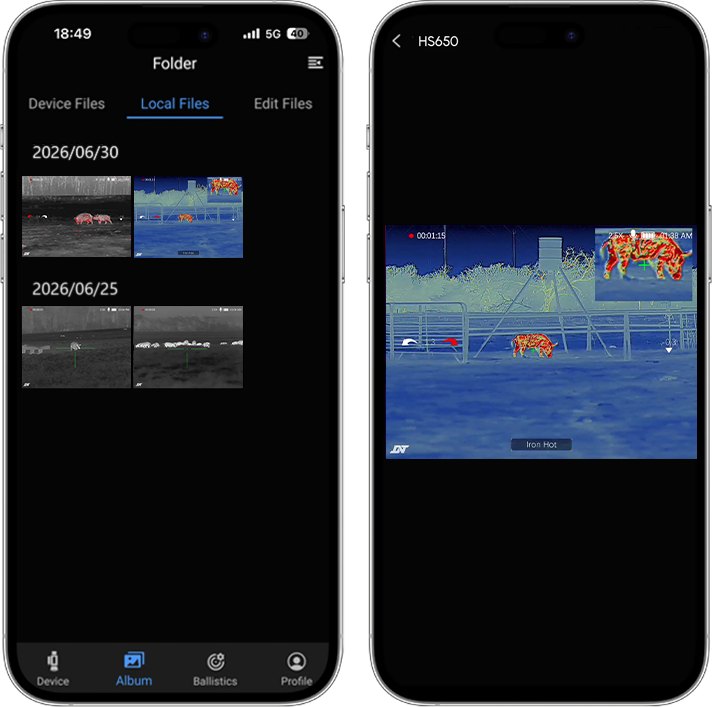
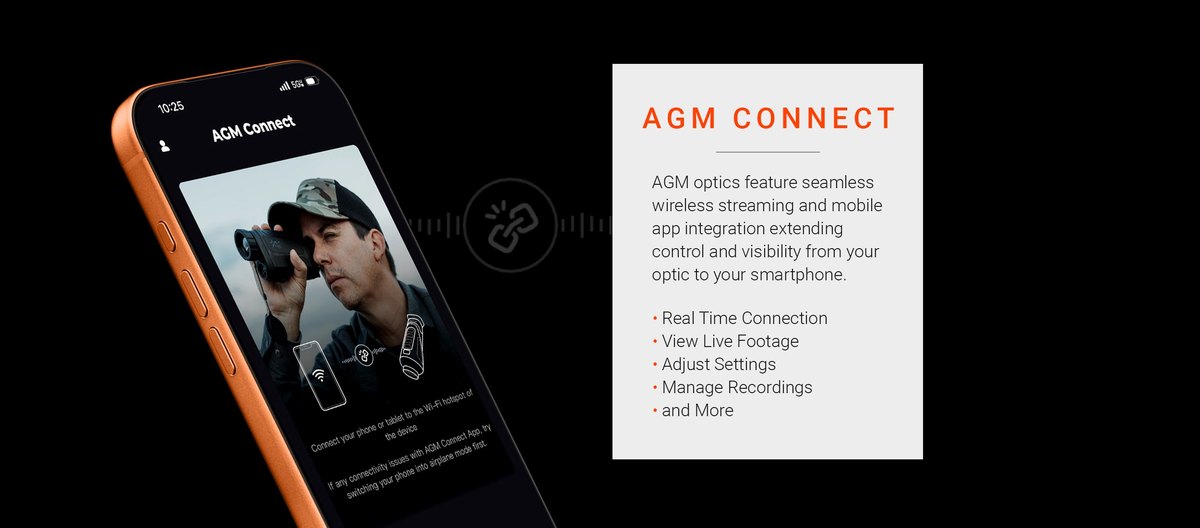
In practice, owners who’ve run both tend to give AGM the edge. One r/ThermalHunting owner who’d had both said the DNT app’s live view lagged badly and video transfers were slow, while AGM’s let them watch what their son was seeing in real time (Reddit thread). They were also clear that none of that changes the image through the scope. If you hunt alone and never pull your phone out, it won’t matter much. If you film your hunts or like a buddy watching along, give it more weight.
The budget tier: Hydra HS335 vs Rattler V2 35-384
Drop down to 384 sensors and the price gap shrinks to something like a third, not double, as of October 30, 2026. And here the spec sheet doesn’t hand AGM the sensor edge. DNT rates the DNT Hydra HS335 at 18 mK or less, and AGM rates the AGM Rattler V2 35-384 under 20 mK. Same sensor size, same 35mm lens and the same 3x base magnification.
| DNT Hydra HS335 | AGM Rattler V2 35-384 | |
|---|---|---|
| Sensor | 384×288, 12 µm, 50 fps | 384×288, 12 µm VOx, 50 Hz |
| NETD (maker’s rating) | 18 mK or less at 25°C | Under 20 mK at 25°C, F/1.0 |
| Lens | 35mm | 35mm, F/1.0 |
| Magnification | 3x base, 3x to 12x digital | 3x base, 3x to 24x digital |
| Field of view at 100 yd | 13.2 x 9.9 yd (about 40 x 30 ft) | 39 x 29 ft |
| Display | 1024×768 micro-OLED | 1024×768 OLED |
| Laser rangefinder | None (the HS335R adds one) | None; stadiametric ranging only |
| Recording and storage | 32GB built-in memory | 16GB built-in; video with audio, shot-activated recording |
| Battery | 18650 flat-top (two included); 4.5 hr rated | NE-4400 removable pack (two included); up to 11 hr rated |
| Weight | 13.7 oz (net weight as listed) | 1.13 lb without battery and mount |
| Warranty | 3 years with product registration | 5 years (U.S. purchases) |
| Use as | Scope, clip-on or handheld | Riflescope |
| Maker’s page | DNT Optics | AGM Global Vision |
| Our listing | DNT Hydra HS335 | AGM Rattler V2 35-384 |
The AGM’s case here is battery and warranty. AGM rates the V2 35-384 for up to 11 hours, more than double the HS335’s 4.5, and backs it for five years, where DNT’s HS335 page shows three. It also zooms further digitally, 24x against 12x. The DNT is lighter, at 13.7 ounces against 1.13 pounds before battery and mount, and it carries the same clip-on and handheld tricks as the bigger Hydra. Neither one has a laser rangefinder. If you want one at this level, look at the HS335R (DNT) or AGM’s newer Rattler V3 LRF 35-384.
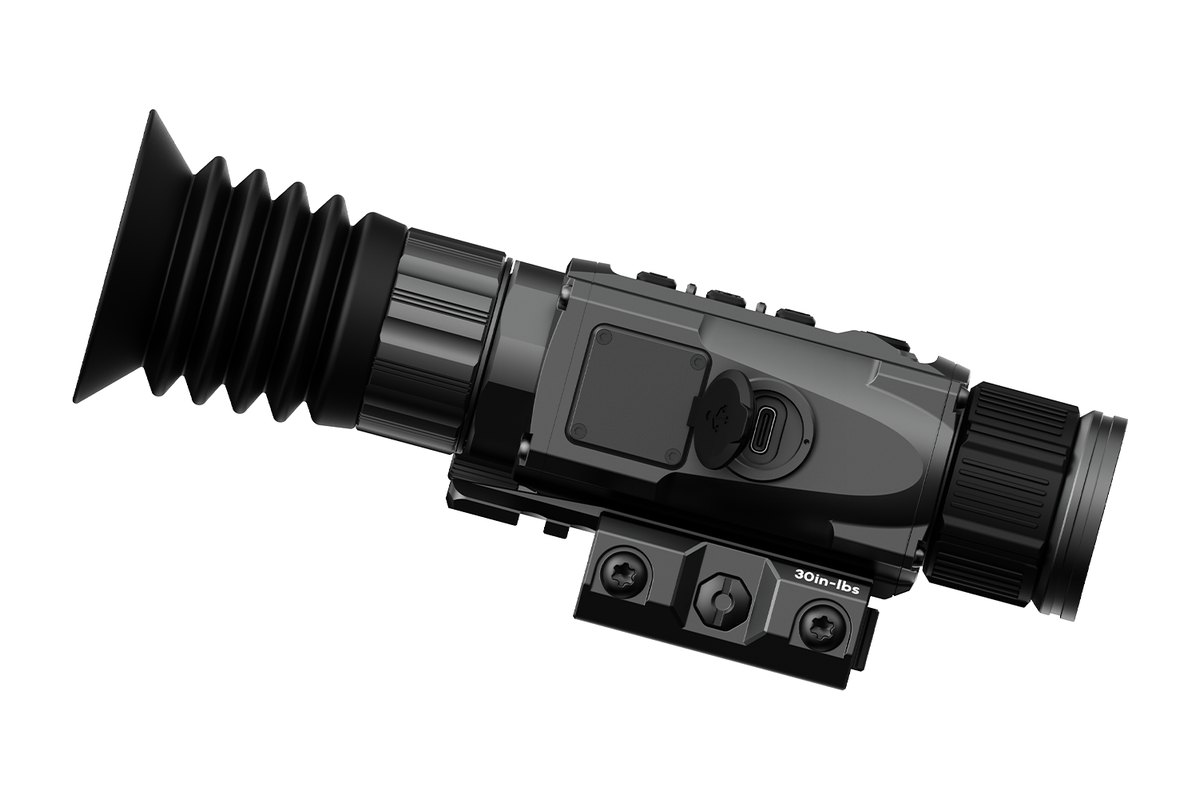
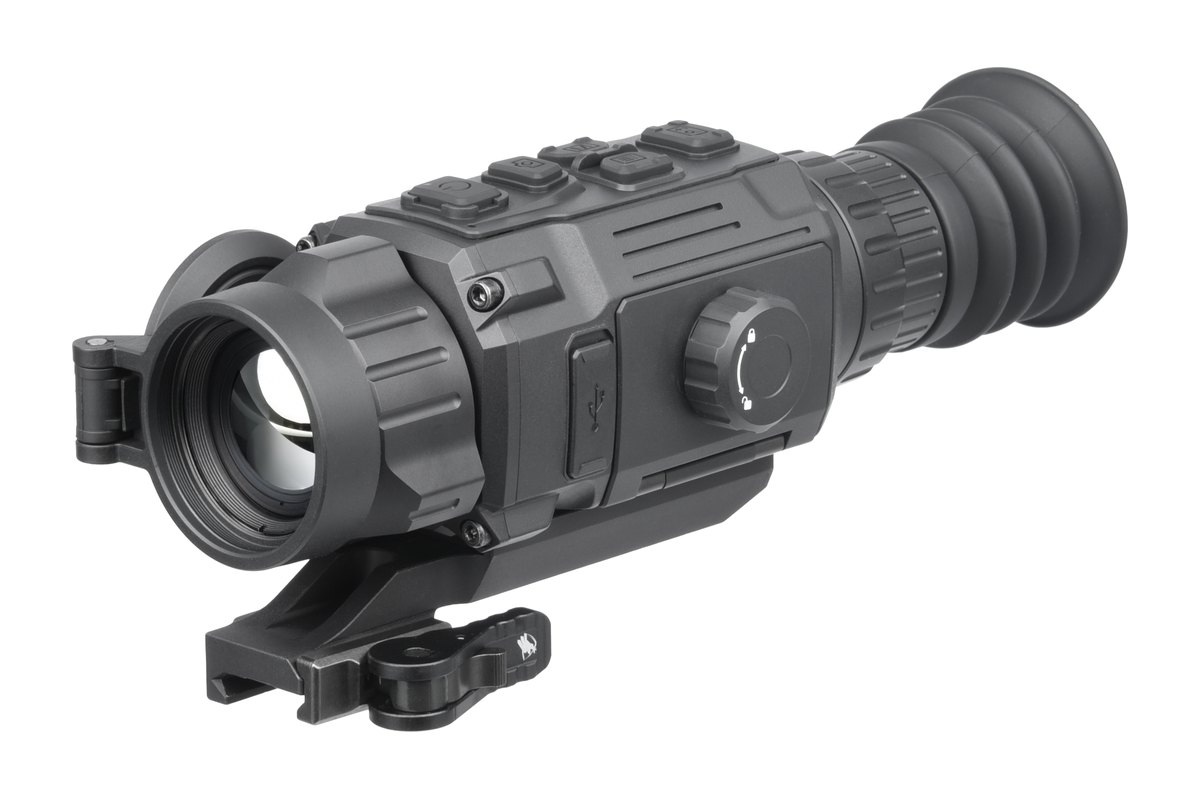
The V2 is the older Rattler generation now that the V3 is out (AGM), so it doesn’t get the V3’s bigger display. What it does keep is that 11-hour battery rating, which is double what AGM lists for the V3 50-640.
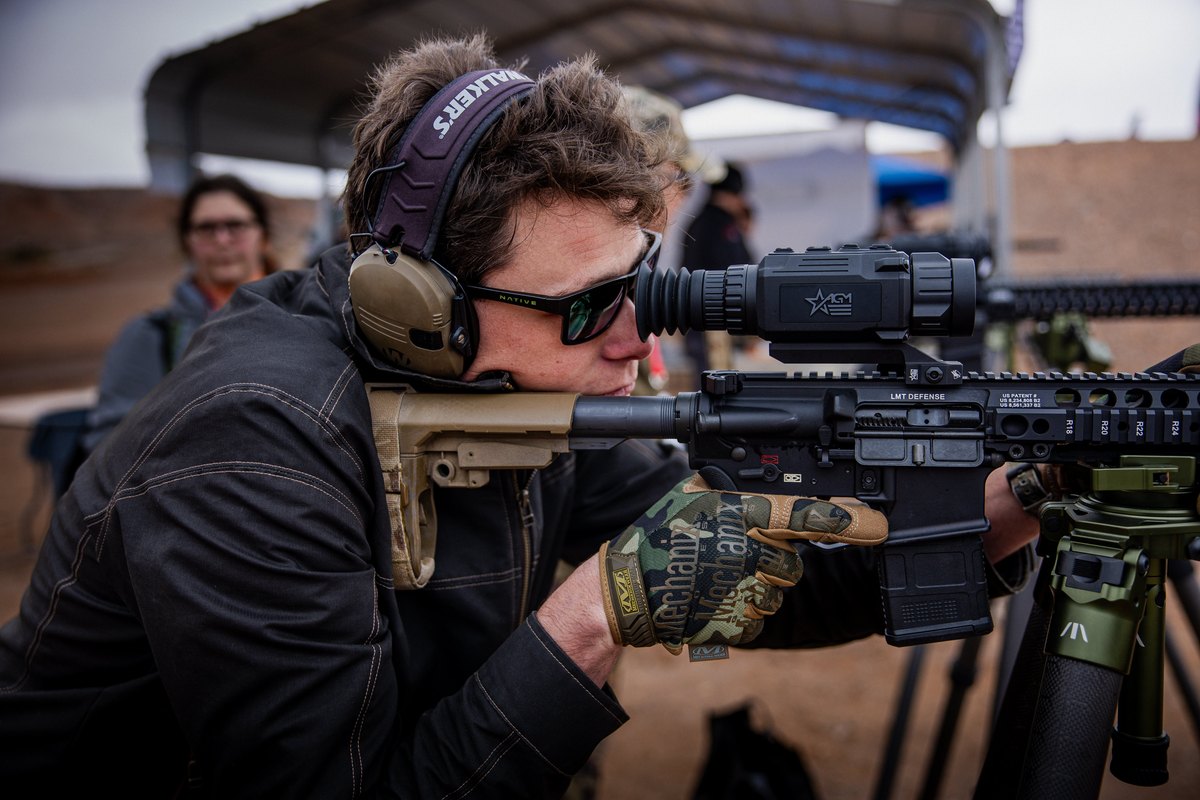
For a longer look at living with a Hydra, 4MR Ranch also reviewed the Hydra HS635 over several months. That’s the 640 version with a 35mm lens, but it’s the same Hydra family and the same 3-in-1 idea.
Which way we’d lean
If thermal is your only optic and you hunt hard in damp country, the Rattler V3 is the one you’ll be glad you stretched for, as long as the budget can take it. If you want one unit to scan, shoot and clip on, or you’d rather put the difference toward a second rifle, the Hydra makes more sense. At the 384 level, battery life and warranty tip the scales toward AGM, and weight and versatility tip them toward DNT, and how you hunt should settle it.
You’ll find both brands and more in our thermal sights, and our night vision section if you’re still weighing the two technologies. If you’re shopping Pulsar too, our Pulsar Thermion 3 vs Thermion 2 breakdown lines up nicely with this one.
FAQ
Is AGM really worth twice the price of DNT?
For most hunters, no. The Rattler V3 50-640 does earn some of it: AGM rates its sensor under 15 mK against DNT’s 18 mK or less, its display is far sharper and its rated battery life is longer. But the DNT Hydra HS650R has the same 640 sensor size and lens, a longer-rated rangefinder and clip-on use for less than half the money. Prices change, so check both pages.
Can the DNT Hydra be used as a clip-on?
Yes. DNT sells every Hydra as a 3-in-1: a standalone scope, a clip-on in front of your day scope, or a handheld monocular (DNT Optics). The AGM Rattler is a dedicated riflescope. If you want an AGM that clips on, that’s the separate Rattler-C line, like the Rattler-C V2 35-384 and Rattler-C V2 50-640.
Which has the better app, DNT or AGM?
The owner feedback we found leans AGM. One owner on r/ThermalHunting said the DNT app’s live view lagged and its video transfers were slow next to AGM’s (Reddit thread). Both apps stream live video and handle recordings. Neither app changes the image you see through the scope, so weigh it by how much you use your phone in the field.
Does the AGM Rattler V3 have a better sensor than the DNT Hydra?
On paper, yes, by a little. Both 640 models use a 640×512, 12-micron sensor at 50 frames per second. AGM rates the Rattler V3 50-640 under 15 mK NETD, and DNT rates the HS650R at 18 mK or less. Lower NETD means finer temperature differences show up. They’re manufacturer ratings, not side-by-side lab numbers (AGM, DNT).
Which one runs longer on a battery?
AGM, on the ratings. AGM lists the Rattler V3 50-640 at up to 5.5 hours on its NE-4400 pack and the Rattler V2 35-384 at up to 11 hours. DNT lists the HS650R at 4 hours and the HS335 at 4.5 hours, but it runs on common 18650 flat-top cells, and both makers include two batteries in the box (AGM, DNT).
What’s the better budget pick, the Hydra HS335 or the Rattler V2 35-384?
It’s close, and the price gap is much smaller down here. The DNT Hydra HS335 is lighter, rates a slightly lower NETD and works as a clip-on. The AGM Rattler V2 35-384 rates far longer battery life, more digital zoom and a 5-year warranty against DNT’s 3. Neither has a laser rangefinder. If you want one, look at the HS335R or Rattler V3 LRF 35-384.
Sources
- DNT Optics: HS650R HYDRA-LRF product page and specifications
- DNT Optics: HS335 Hydra product page and specifications
- DNT Optics: HS335R HYDRA-LRF product page
- DNT Optics: TNC335R ThermNight product page
- AGM Global Vision: Rattler V3 LRF 50-640
- AGM Global Vision: Rattler V2 35-384
- AGM Global Vision: Rattler V3 collection page and Rattler V2 collection page
- AGM Global Vision: Warranty terms
- 4MR Ranch: “The Diminishing Returns of Thermal” (YouTube)
- 4MR Ranch: “The Budget Thermal Device King | Hydra HS635” (YouTube)
- r/ThermalHunting: “New 640 Thermal Question,” October 2025
- r/ThermalHunting: “Dnt hydra, thermnight or one leaf thermal?” October 2025
Change log
- October 30, 2026: First published.